

The AlphaSignal signal called it a free tool that forces Claude Code and Cursor to code like a senior dev. The repo is multica-ai/andrej-karpathy-skills, and it is almost absurdly small: one CLAUDE.md file, now past 200,000 GitHub stars.
Andrej Karpathy did not write the file. The community distilled his public thread on how coding agents fail: silent wrong assumptions, bloated abstractions, orthogonal edits, and vague tasks with no verification loop.
I have shipped with Cursor and Claude Code on client repos all year. This is the lowest-friction guardrail I would actually recommend before another 64-module skills framework.
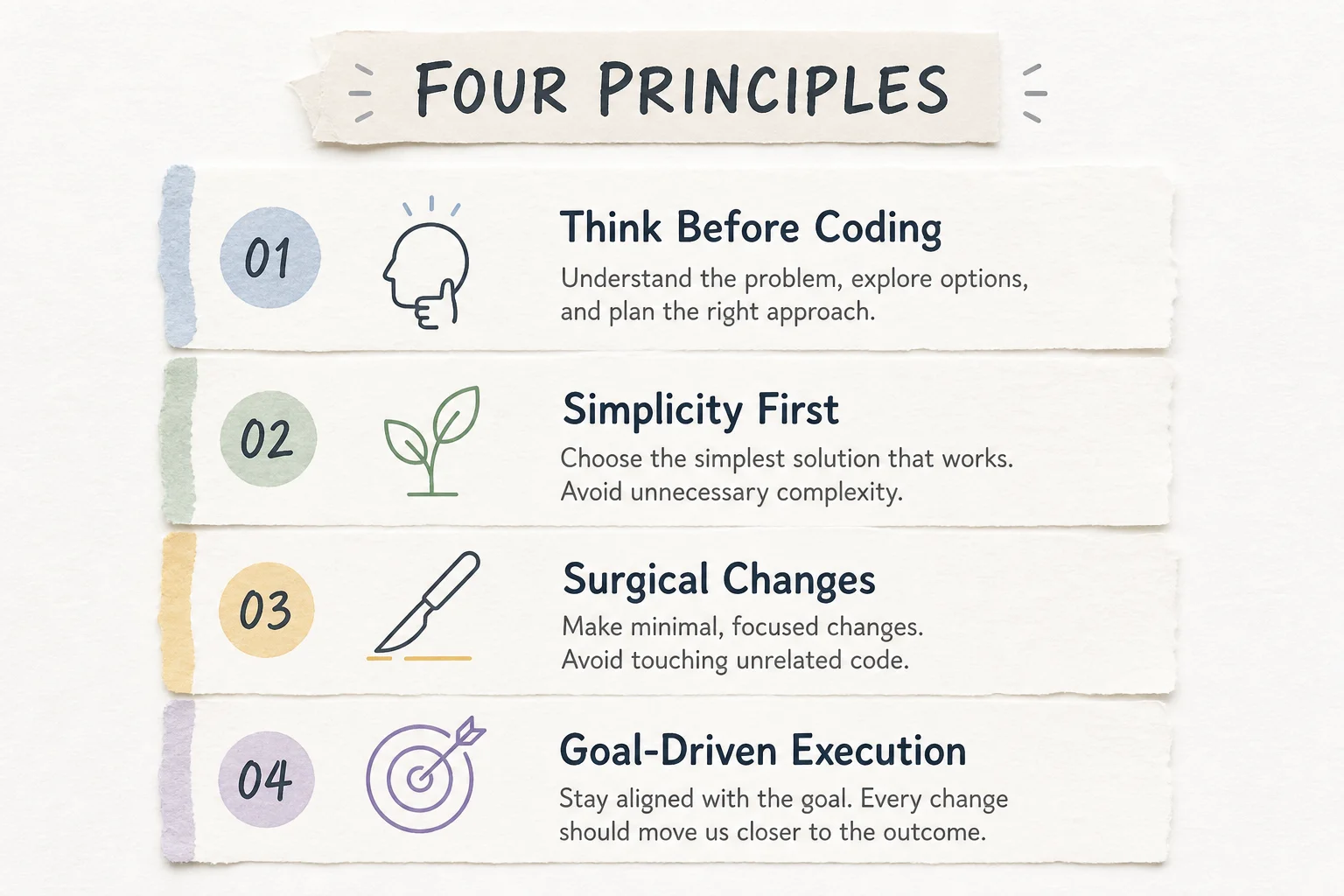
Four principles, one file
The entire system is four sections you paste into CLAUDE.md or a Cursor rule:
| Principle | What it fixes |
|---|---|
| Think before coding | Silent assumptions, missing tradeoffs |
| Simplicity first | 200-line solutions that should be 50 |
| Surgical changes | "Helpful" refactors outside the task |
| Goal-driven execution | "Make it work" instead of verifiable success |
Goal-driven execution is the one I see violated most. The file literally reframes tasks:
- "Fix the bug" becomes "write a test that reproduces it, then make it pass"
- "Add validation" becomes "write tests for invalid inputs, then make them pass"
That is senior behavior encoded as markdown, not charisma.
Why this beat sprawling skill marketplaces
Compare the install surface:
- Superpowers / GStack / 64-module kits: powerful, heavy, harness-specific setup
- Karpathy skills file: copy one markdown file, merge with your project rules, done
For teams, the lightweight file wins onboarding. New engineers do not learn a plugin taxonomy on day one. They read four principles and immediately get smaller diffs.
Cursor support ships as a matching project rule in the repo. Claude Code reads CLAUDE.md automatically each session. Same content, two harnesses. That matches how I already document stack conventions for agents.
How I merge this with Spec Kit and OpenADE
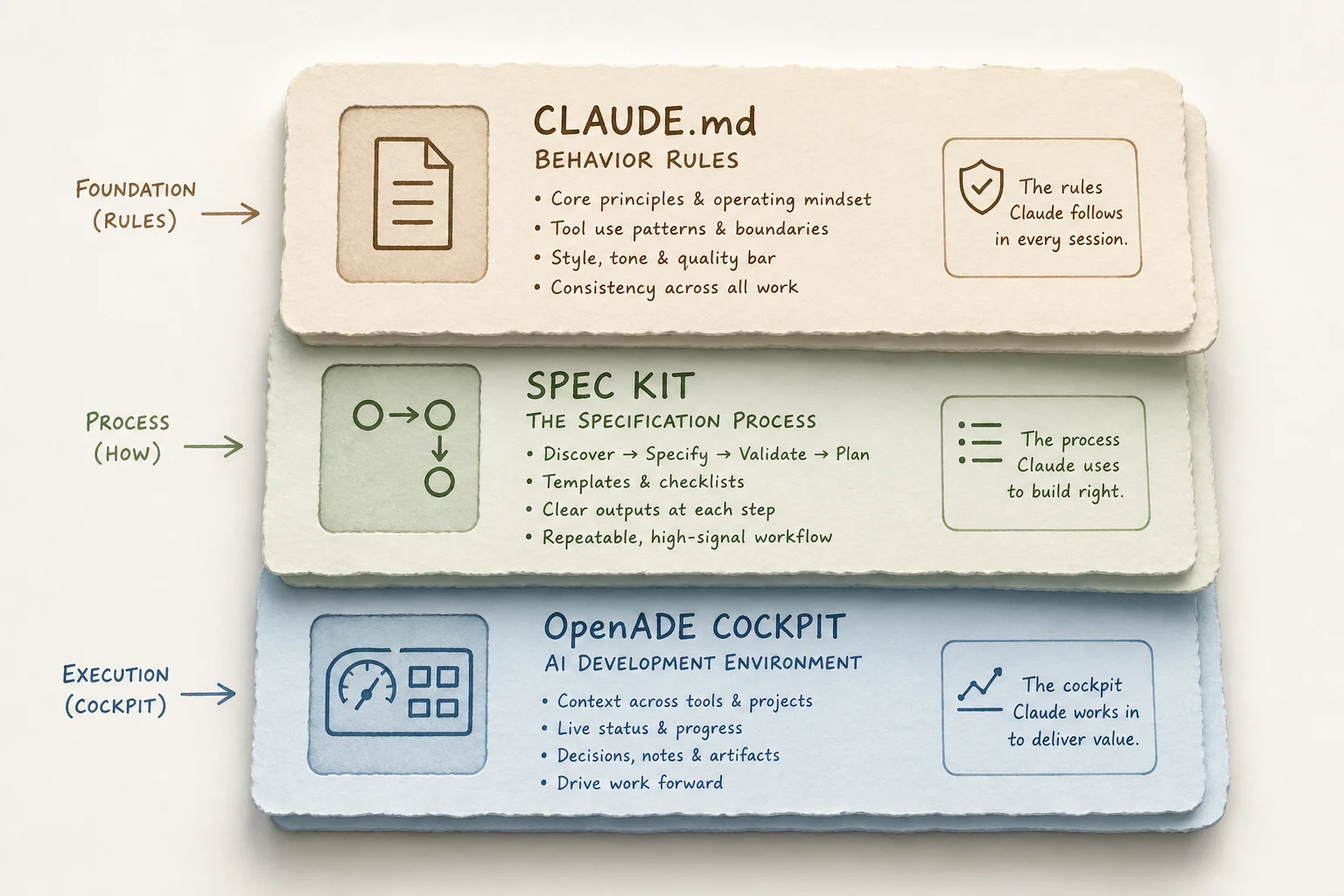
These tools solve different layers:
| Layer | Example tool | Job |
|---|---|---|
| Behavior | Karpathy CLAUDE.md | Stop sloppy edits and vague goals |
| Process | Spec Kit | Constitution → specify → plan → tasks |
| Cockpit | OpenADE | Review plans before execution |
I would not pick one. I would stack behavior rules under process rules under review UI.
On a recent client Next.js repo, adding explicit "surgical changes" language cut drive-by formatting edits in agent PRs noticeably. Not zero, but fewer "why did it rename this unrelated hook?" moments.
Attribution and hype checks
Worth saying plainly:
- Karpathy's observations sparked the content; he is not maintaining the repo
- Stars are a social signal, not a peer-reviewed result
- A markdown file cannot fix a bad harness or missing tests
Still, at 200K stars, the file is now de facto industry shorthand for agent discipline. Ignoring it means your agents behave differently from most open-source examples new hires already copied at home.
Useful links:
The takeaway
The best agent upgrade this month might not be a smarter model. It might be a one-page contract that says "do not touch unrelated code, and prove the fix with a test."
If you want help wiring agent rules, review gates, and spec workflows into a team that already uses Cursor or Claude Code, book a free discovery call.