
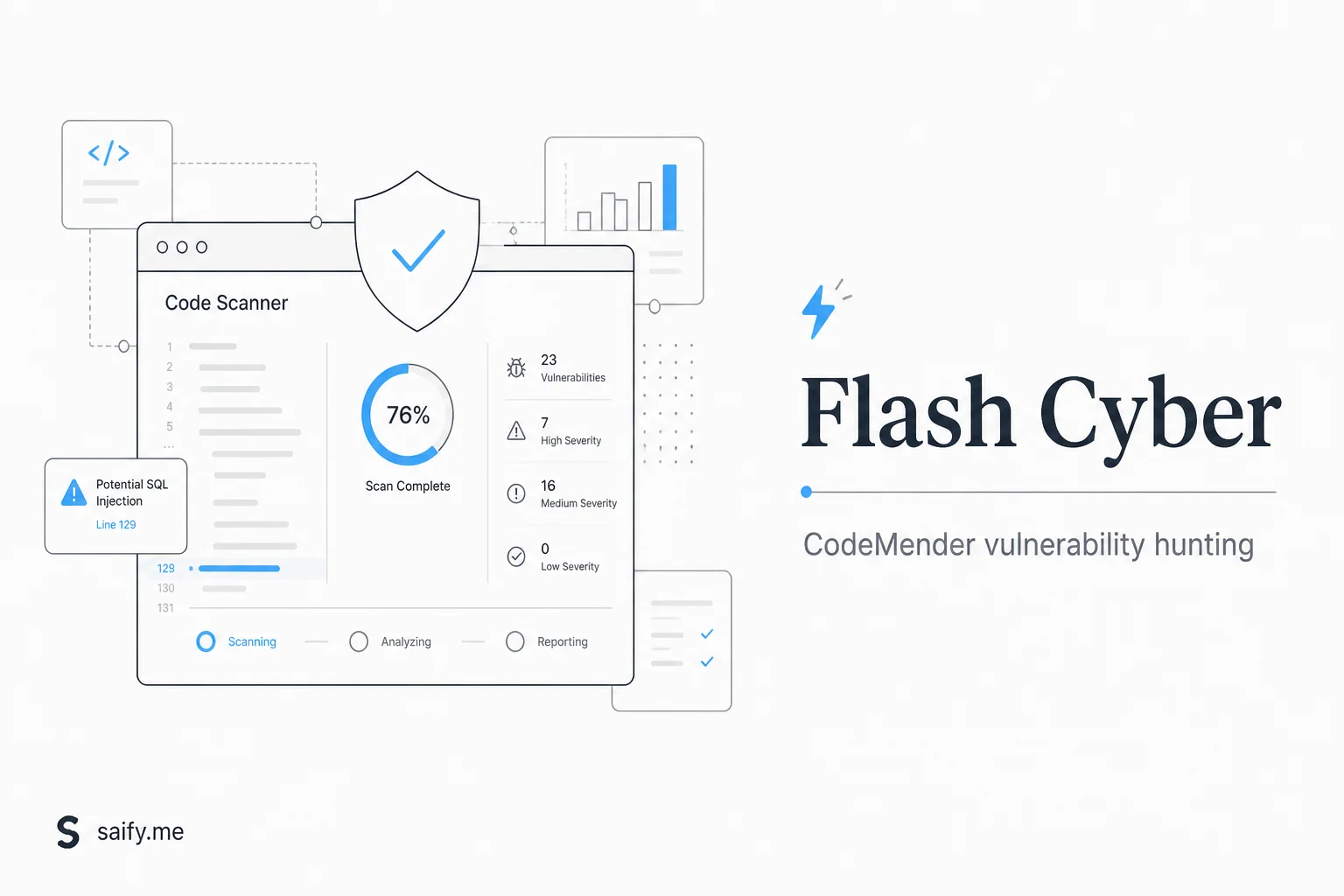
Google DeepMind dropped three Flash-family models on July 21, 2026. Two are for everyone. One is deliberately locked down.
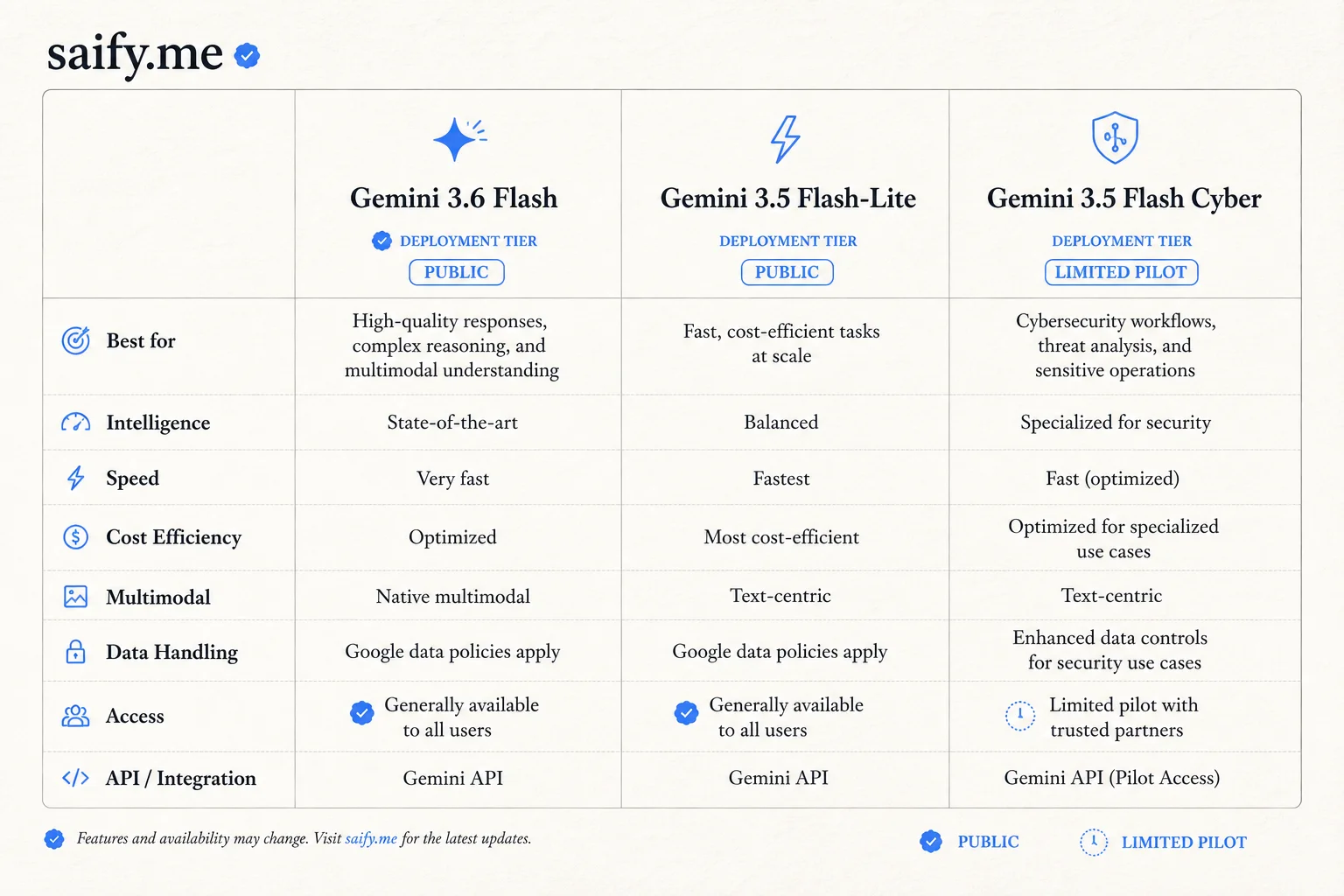
Gemini 3.6 Flash targets coding and agentic workflows with fewer tokens per task. Gemini 3.5 Flash-Lite chases low-latency search and document throughput. Gemini 3.5 Flash Cyber is the interesting one for security teams: a lightweight specialist fine-tuned to hunt, validate, and patch vulnerabilities, orchestrated inside CodeMender, Google's AI code security agent.
I ship agent systems for operators who cannot afford another "we turned off guardrails for the benchmark" story. Flash Cyber is Google's attempt to give defenders a cost curve that matches how attackers already scale LLM-assisted recon.
Why a separate cyber model (and why it is not on the public API)
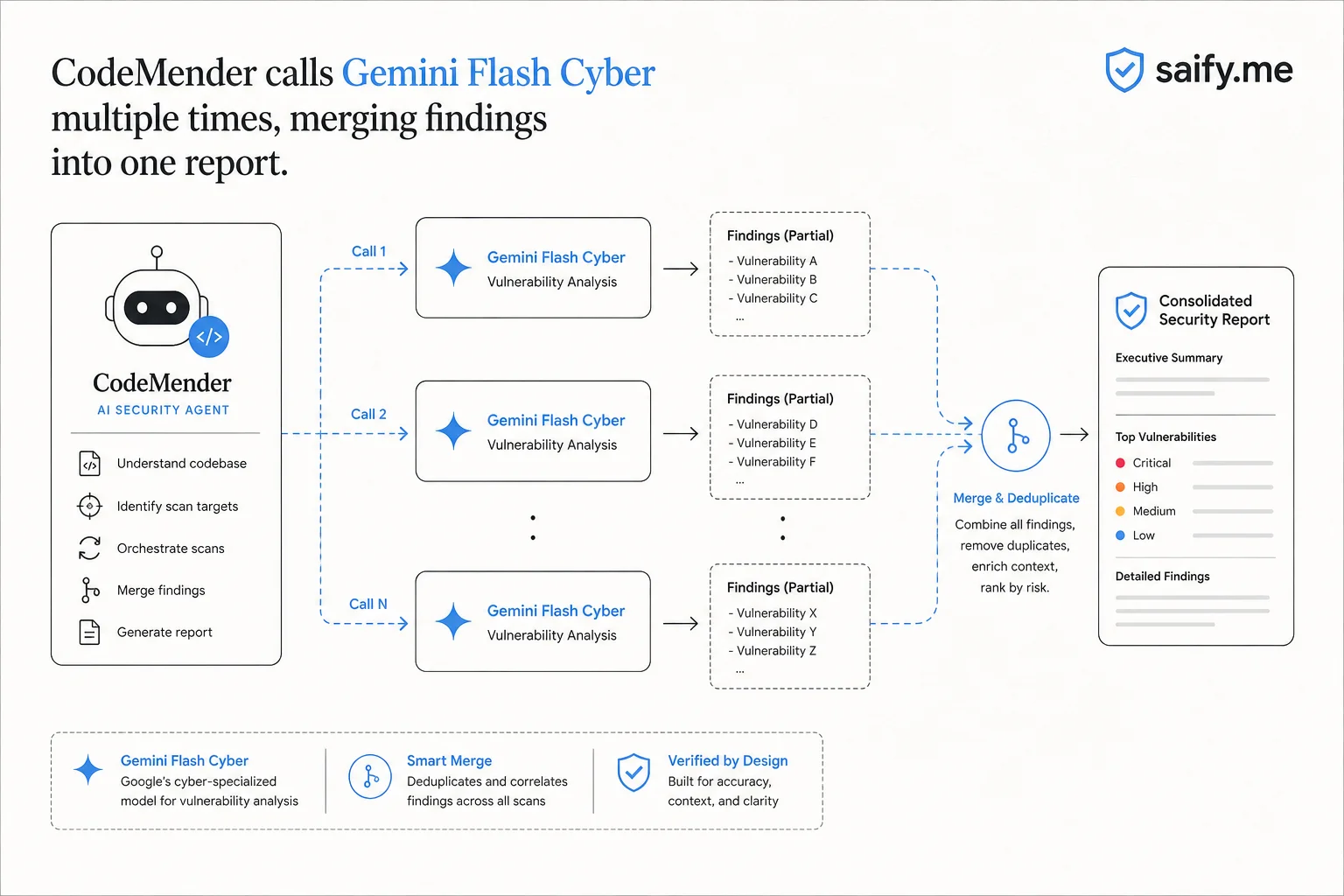
Mainline Flash models are generalists. Cyber work needs deep path exploration across huge codebases. CodeMender solves that by calling 3.5 Flash Cyber up to five times per final report, trading repeated cheap inference for coverage you would otherwise buy with a giant model bill.
Google's own framing: Flash efficiency makes cyber scanning economically viable at defender scale.
The catch is dual use. The same capability that finds zero-days for patching can find zero-days for exploitation. Google's deployment answer is restrictive:
- 3.5 Flash Cyber: limited pilot for governments and trusted partners through CodeMender
- 3.6 Flash and 3.5 Flash-Lite: generally available via AI Studio, Gemini API, Enterprise Agent Platform, and the Gemini app
DeepMind's announcement and Google's model blog both emphasize frontline defenders getting head start access while misuse risk is managed.
That is the opposite of "ship capability, hope for the best." It is also a reminder that your agent stack may soon face models trained specifically to break assumptions in your code.
Benchmarks: CyberGym and real browser codebases
Google tested Flash Cyber on CyberGym, a benchmark of hundreds of real-world software vulnerabilities, with CodeMender orchestrating multiple model calls into one report. The specialist model reached competitive frontier performance while staying cheaper per token than large cyber models.
Separate Big Sleep stress tests (Google's vulnerability research team) pushed beyond CyberGym with guardrails removed for evaluation purposes. On complex targets like Chrome and Safari, DeepMind reports Flash Cyber significantly surpassed mainline 3.5 Flash, 3.6 Flash, and Anthropic Claude Opus 4.6 on unique findings.
Numbers from the announcement (fixed compute budget on a Safari-class target):
| Model | Unique vulnerabilities found |
|---|---|
| Gemini 3.5 Flash Cyber | 58 |
| Gemini 3.5 Flash (mainline) | 47 |
| Claude Opus 4.6 | 36 |
Ten issues were caught only by Flash Cyber in that head-to-head setup. Treat vendor benchmarks as directional, but the pattern matches what I expect from domain fine-tunes plus agentic re-querying: coverage beats one-shot prompts.
3.6 Flash and 3.5 Flash-Lite for the rest of your stack
Not every workflow needs a cyber specialist.
Gemini 3.6 Flash ships with stronger Frontier Safety safeguards on CBRN and cyber-offense misuse, plus training to reduce false refusals on benign tasks. Google positions it for coding, knowledge work, multimodal agents, and computer use with fewer output tokens and tool calls than 3.5 Flash.
Gemini 3.5 Flash-Lite targets high-throughput, low-latency jobs: agentic search, document processing, configurable reasoning levels, and built-in computer-use hooks.
If you are building customer-facing agents today, these two are the practical integration surface. Flash Cyber is the signal for how your security team should plan, not something you paste into a chatbot tomorrow.
Lessons for teams shipping agents (even without CodeMender access)
Specialist models plus orchestration beat one-shot giant prompts. CodeMender's multi-call pattern is the same economics I use in production RAG: small models, repeated passes, merge step.
Dual-use capabilities will gate on trust tiers. Expect more "defender pilot first" launches after ExploitGym-style headlines. If you rely on public APIs for security scanning, plan for capability lag versus nation-state or platform-native tooling.
Pair offensive evals with containment you would accept in prod. Google's restricted rollout is an admission that cyber-capable models are not neutral infrastructure.
Keep general agents away from unaudited code execution. Flash Cyber exists because path exploration at scale is dangerous. Your internal agents should not get silent shell access "just to fix tickets."
Google also notes CodeMender's foundational capabilities are coming to customers through the Gemini Enterprise Agent Platform with generally available models, even while Flash Cyber stays gated.
Cheap Flash models changed agent economics. Flash Cyber changes the security baseline those agents must meet. If you are wiring MCP tools, sandboxes, or code-review bots and want a containment review before you scale, book a free discovery call.