
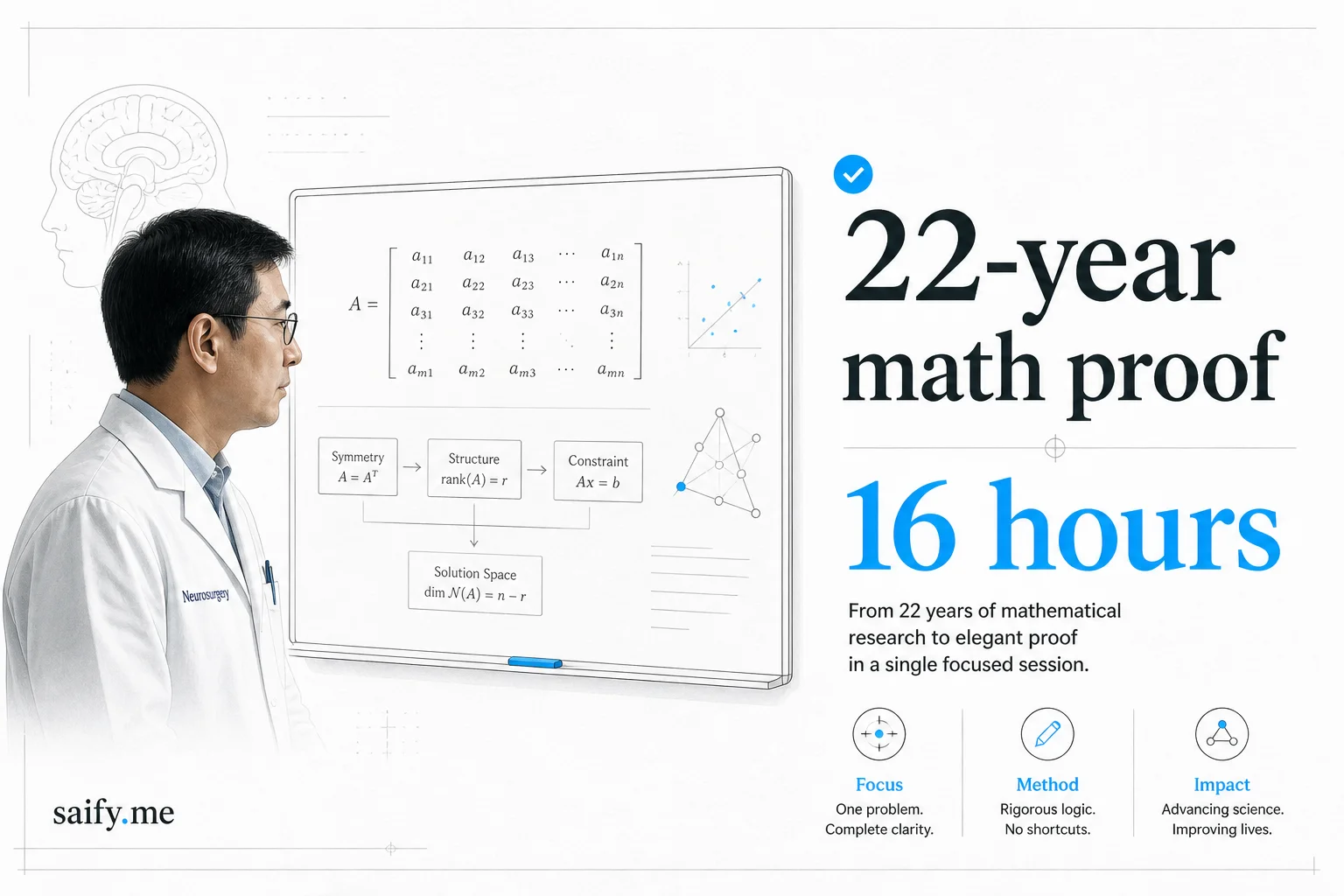
A matrix inequality that sat open since 2004. A neurosurgery resident with no formal math training. A 16-hour autonomous ChatGPT session with the internet turned off.
That is how Crouzeix's conjecture fell in July 2026, and the part that should worry (and excite) builders is not the headline. Verification became the bottleneck, not ideation.
What Jin actually proved
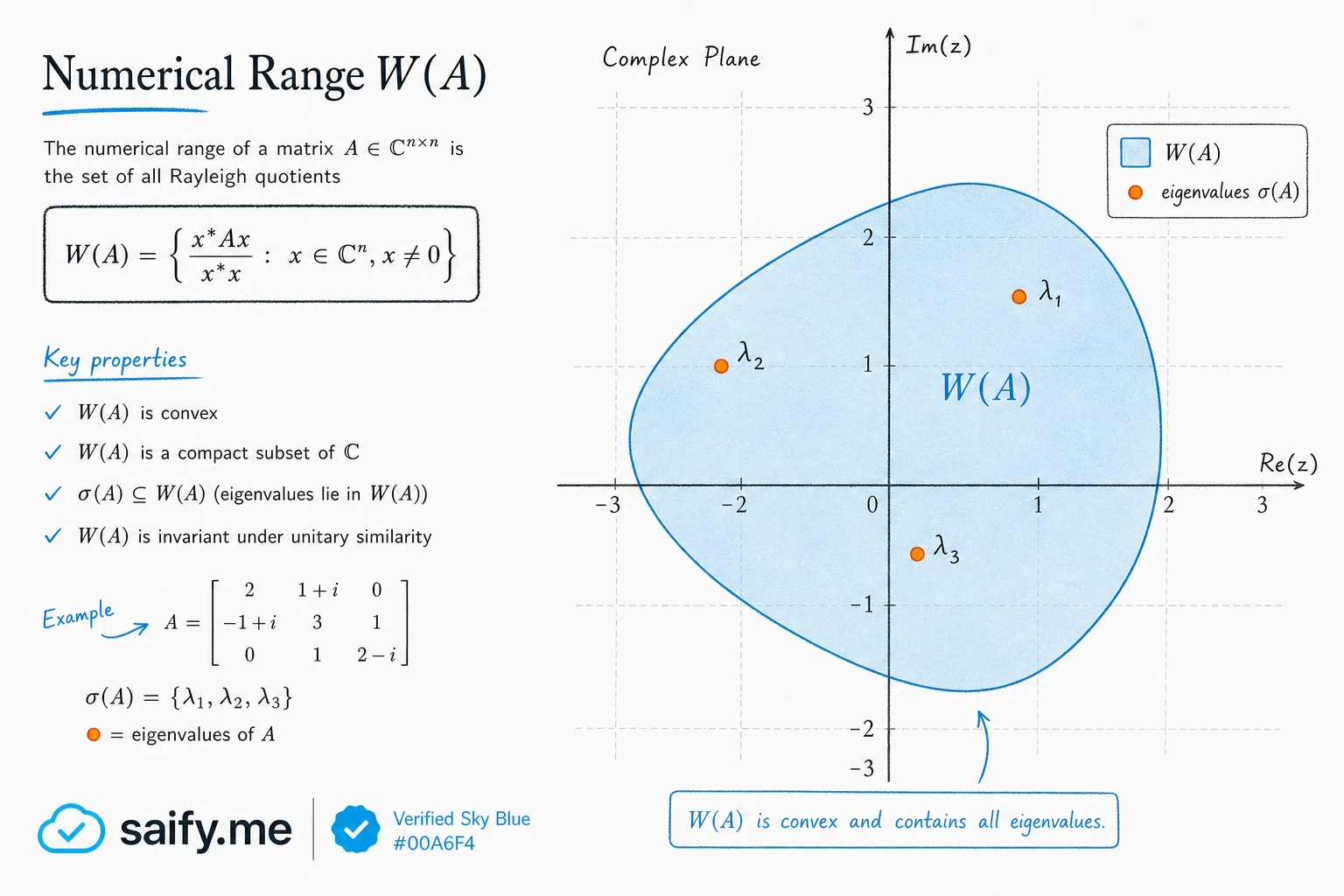
For a complex matrix A, the numerical range W(A) is the set of values x*Ax where x is a unit vector. It is a compact convex region in the complex plane that contains A's eigenvalues. For nonnormal matrices, eigenvalues alone tell an incomplete story.
Crouzeix conjectured that for every polynomial p:
||p(A)||_2 ≤ 2 max_{z ∈ W(A)} |p(z)|
The constant 2 matters. Prior work tightened upper bounds (11.08, then 1+√2 ≈ 2.414), but the conjectured factor of 2 stayed open for more than two decades.
Jin's public repository includes the preprint, Lean formalization, axiom audit, and the exact prompt he used. That openness is unusual for a result this size, and it is exactly what makes the story useful for applied AI teams.
The person behind the proof
Dr. Shanmu Jin is a postdoctoral researcher and neurosurgery resident at Peking Union Medical College Hospital. Undergraduate geology. Medical degree. Self-taught matrix analysis after encountering the problem through transcranial ultrasound research.
Townsend and Greenbaum, who wrote the SIAM News essay, checked the proof thoroughly along with Michel Crouzeix himself. Jin's reaction to an independent proof appearing eight days later was delight, not defensiveness. That tone matters when AI-assisted results start arriving in batches.
The ChatGPT setup worth copying
Jin adapted a prompt OpenAI used for the Cycle Double Cover conjecture. The constraints:
| Rule | Why it matters |
|---|---|
| No public web or external context | Stops the model from anchoring on stale forum answers |
| Branching portfolio of genuinely different approaches | Avoids one attractive dead end eating the whole run |
| Subagents that audit each other | Surfaces counterexamples before you celebrate |
| Do not stop until a complete proof survives checking | Forces closure instead of plausible stubs |
The run lasted roughly sixteen hours. Jin did not intervene. The decisive theorem (Theorem 2 in his preprint) emerged from that session.
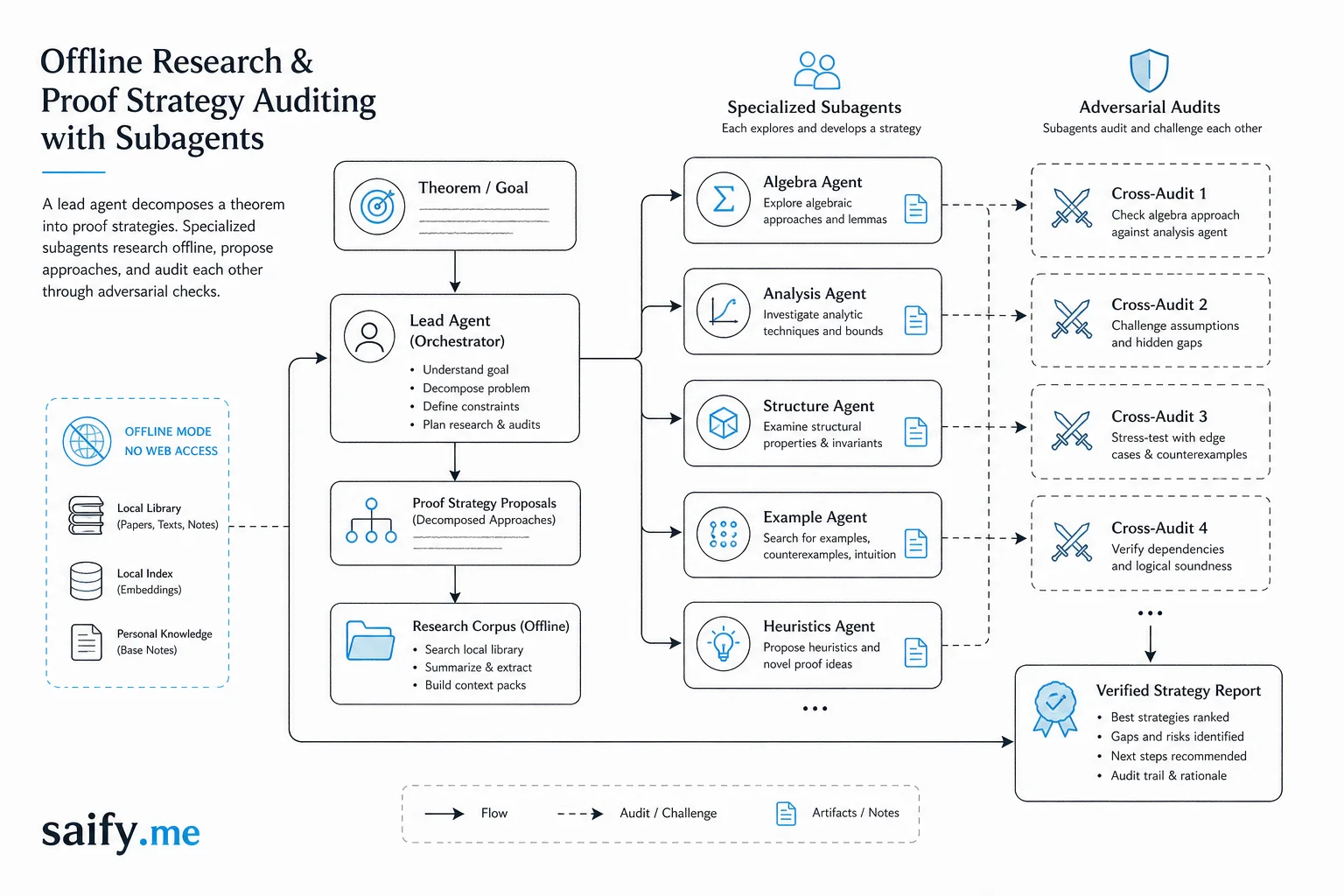
If you ship agent systems, this is the pattern: deny easy retrieval, force diversity, adversarial review, long horizon. It is the same shape as red-team harnesses for code, just pointed at math.
Verification is the new scarce skill
Formal peer review is still pending in the traditional journal sense. But expert mathematicians already signed off. Lorist and Schwenninger posted a five-page independent proof on August 4. Michael Hartz recast Jin's idea in another language and connected the two arguments.
Math is having a wild AI summer, and it is not only career mathematicians landing breakthroughs. That stings if your identity is tied to gatekeeping ideas. It is liberating if your identity is tied to checking whether ideas compile.
We saw the same shift with OpenAI's ten Lean-certified results weeks earlier. The through-line is not "models are smart now." It is that machine-checkable certificates and open repositories let outsiders contribute without waiting years for journal cycles.
What builders should take from this
- Long autonomous runs are a product feature, not a party trick. Sixteen hours offline is a deliberate harness choice.
- Publish prompts and audits. Jin's repo made the result inspectable. That is how you earn trust when anyone with a subscription can spawn a proof attempt.
- Budget for expert verification. The model proposed. Humans (and second proofs) confirmed. Your client workflows need the same split.
- Do not confuse access with expertise. Jin had domain motivation and enough math to steer. The model did not replace that judgment.
Townsend and Greenbaum close their essay with a blunt question: can academia absorb the flood of AI-assisted results? For applied teams, the mirror question is simpler. Can your review pipeline handle ten credible drafts a week instead of one a quarter?
If you are wiring agent harnesses for high-stakes work (finance, health ops, compliance), the Crouzeix story is a preview. Generation got cheap. Verification is where the margin moves next.
Book a free discovery call if you want help designing review layers around autonomous agent runs.