
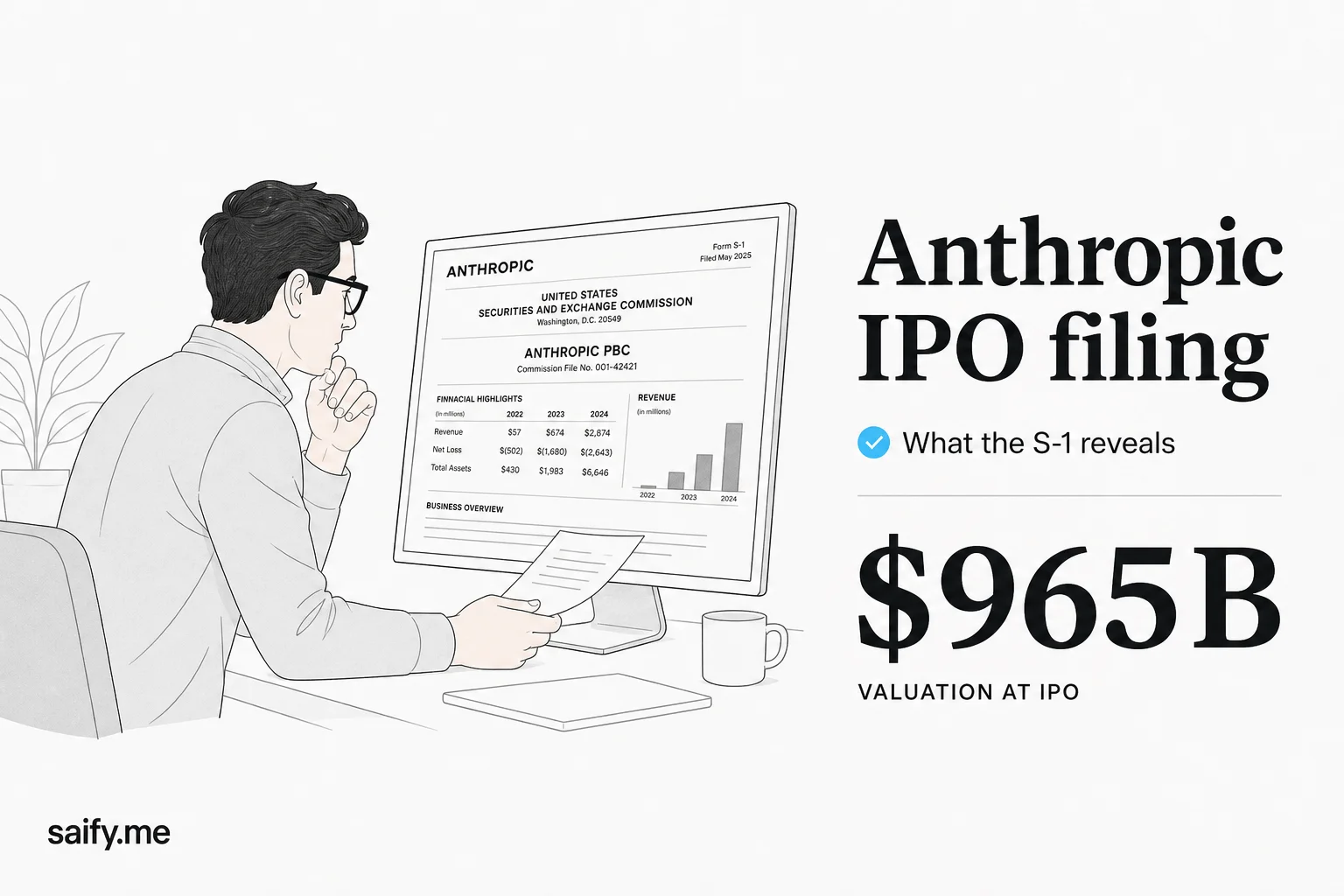
On June 2, 2026, Anthropic filed confidential IPO paperwork with the SEC. The headline numbers from the filing cycle are hard to ignore: a $965 billion valuation and a $47 billion annualized revenue run rate.
If you build on Claude or Claude Code, this is not distant finance news. It is the backdrop for pricing, roadmap pressure, and how much transparency you will eventually get about the business behind the models you ship with.
What a confidential S-1 actually means
An S-1 is the disclosure document a company files before going public. Revenue, costs, risks, ownership, executive pay. The works.
The confidential part is procedural, not secret forever. Under the JOBS Act framework, eligible companies can submit drafts to the SEC for private review first. Anthropic can fix issues before the public sees a polished filing.
SEC EDGAR filings databaseThis filing does not lock Anthropic into a listing date. It keeps the option open. What it signals is intent: the company behind Claude is preparing for public market scrutiny.
For developers, the practical shift is slower but real. More financial disclosure usually means more predictable enterprise contracts, clearer uptime commitments, and louder investor questions about margin on API and seat pricing.
The numbers behind the headline
The digest and subsequent reporting framed the filing against OpenAI's private valuation (~$852B at the time). Anthropic's $965B figure sits on top of a revenue story that moved fast:
| Metric | Reported figure |
|---|---|
| Valuation | ~$965B |
| Revenue run rate | ~$47B annualized |
| Prior run rate (end of prior year) | ~$9B |
| Share count / IPO price | Not set at confidential filing stage |
Growth is attributed heavily to enterprise Claude for coding and workflow automation. That matches what I see in client work: Claude Code seats spreading through engineering orgs faster than generic chat licenses.
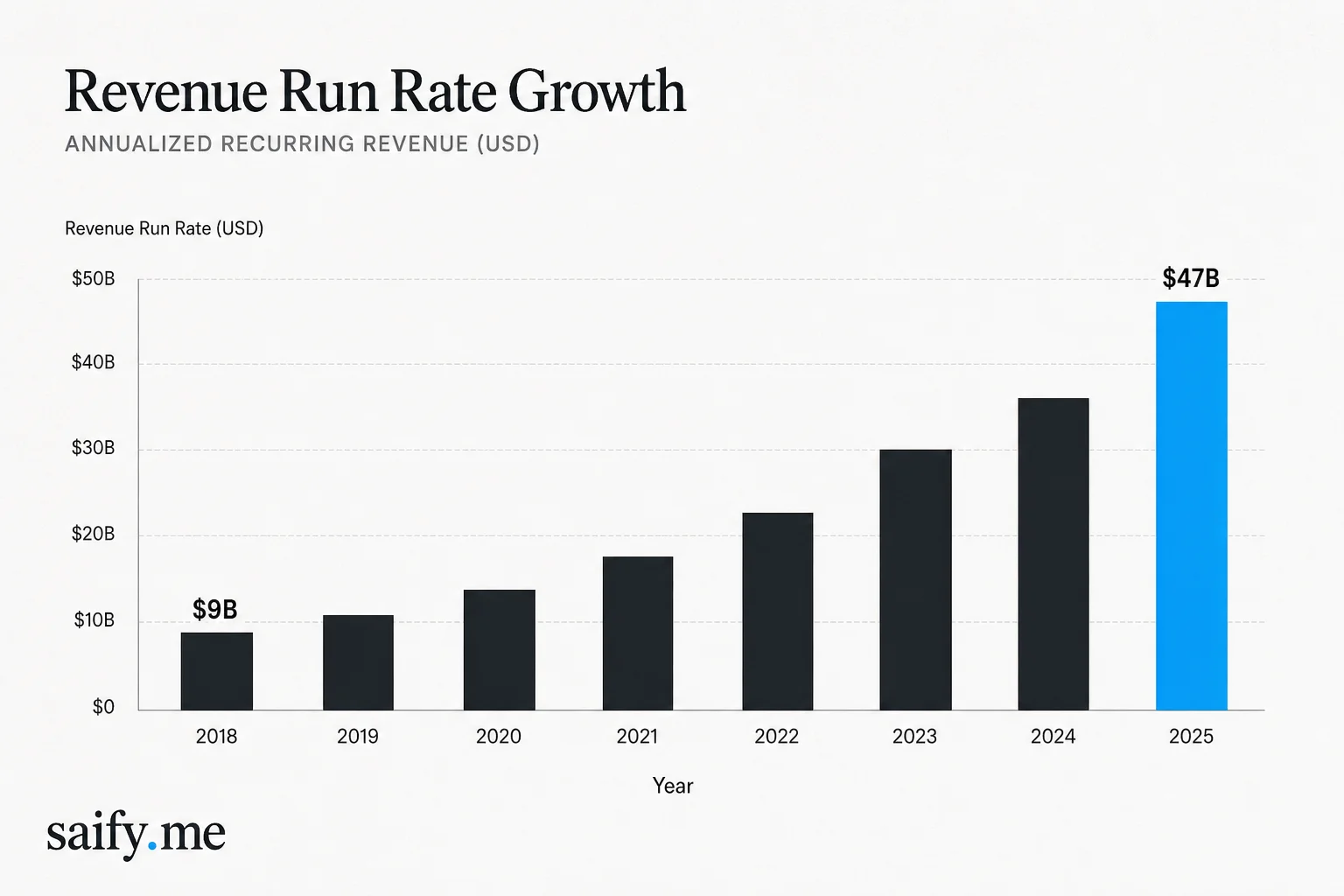
The valuation-to-revenue ratio is aggressive by any historical software standard. Public markets will ask how much of the $47B run rate is durable expansion versus consumption spikes that reverse when finance teams audit token bills.
Why this matters if you ship on Claude
1. Enterprise procurement gets easier (and nosier).
Public-company vendors pass security reviews faster at Fortune 500 accounts. They also face quarterly earnings calls. Expect louder messaging on coding agents, safety, and seat expansion.
2. Pricing pressure cuts both ways.
IPO-bound model providers need growth and a path to margin. That can mean better volume tiers for committed spend. It can also mean stricter metering, fewer generous legacy plans, and harder negotiations on Claude Code site licenses.
3. Roadmap bets become legible.
Investors will reward categories with clear revenue: coding automation, agent platforms, vertical workflows. Features that do not map to ARR get deprioritized. Watch what Anthropic ships for builders versus chat consumers.
Claude Code documentation4. Competitive IPO timing with OpenAI.
OpenAI has been reported preparing its own listing. Two frontier labs racing to public markets in the same window is unusual. Customers may benefit from feature velocity. They may also get caught in narrative-driven roadmap whiplash.
Confidential today, transparent tomorrow
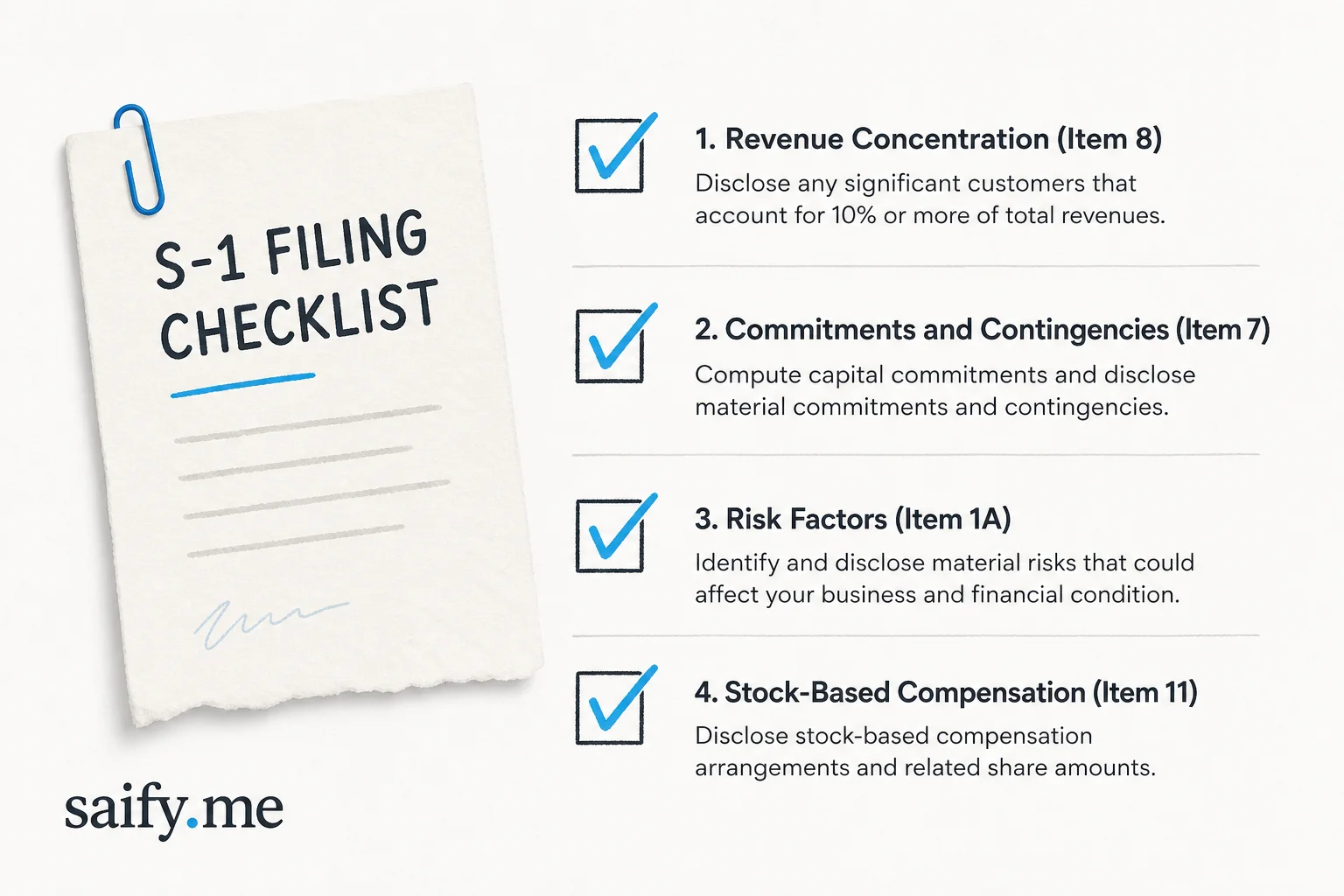
When the public S-1 drops, read these sections first:
- Revenue concentration — how much comes from a handful of hyperscalers or resellers
- Compute commitments — cloud and chip obligations that outlive any single model generation
- Risk factors on safety and regulation — export controls, liability, enterprise indemnities
- SBC and stock-based comp — how much dilution employees and early investors carry into the float
None of that replaces a technical eval. It tells you whether the vendor will still afford the inference bill that makes your agent demo feel magical at 2 a.m.
What I would do this quarter
If Claude is already in production:
- Lock contract terms before public-market narrative shifts pricing
- Measure cost per shipped task, not tokens per seat
- Document failover to a second model provider for critical workflows
- Track deprecations on APIs and agent tools as aggressively as you track CVEs
If you are still piloting:
- Treat the IPO filing as a forcing function for procurement, not a reason to delay
- Run the pilot on real tickets with finance in the room from week two
Bottom line
Anthropic's confidential IPO paperwork is the start of a transparency arc, not the finish line. The $965B valuation and $47B run rate tell you where the market thinks coding and enterprise agents are headed. Your job is to make sure your stack still makes sense when the S-1 footnotes become headlines.
Need help stress-testing Claude-dependent workflows before your next enterprise renewal? Book a free discovery call.