
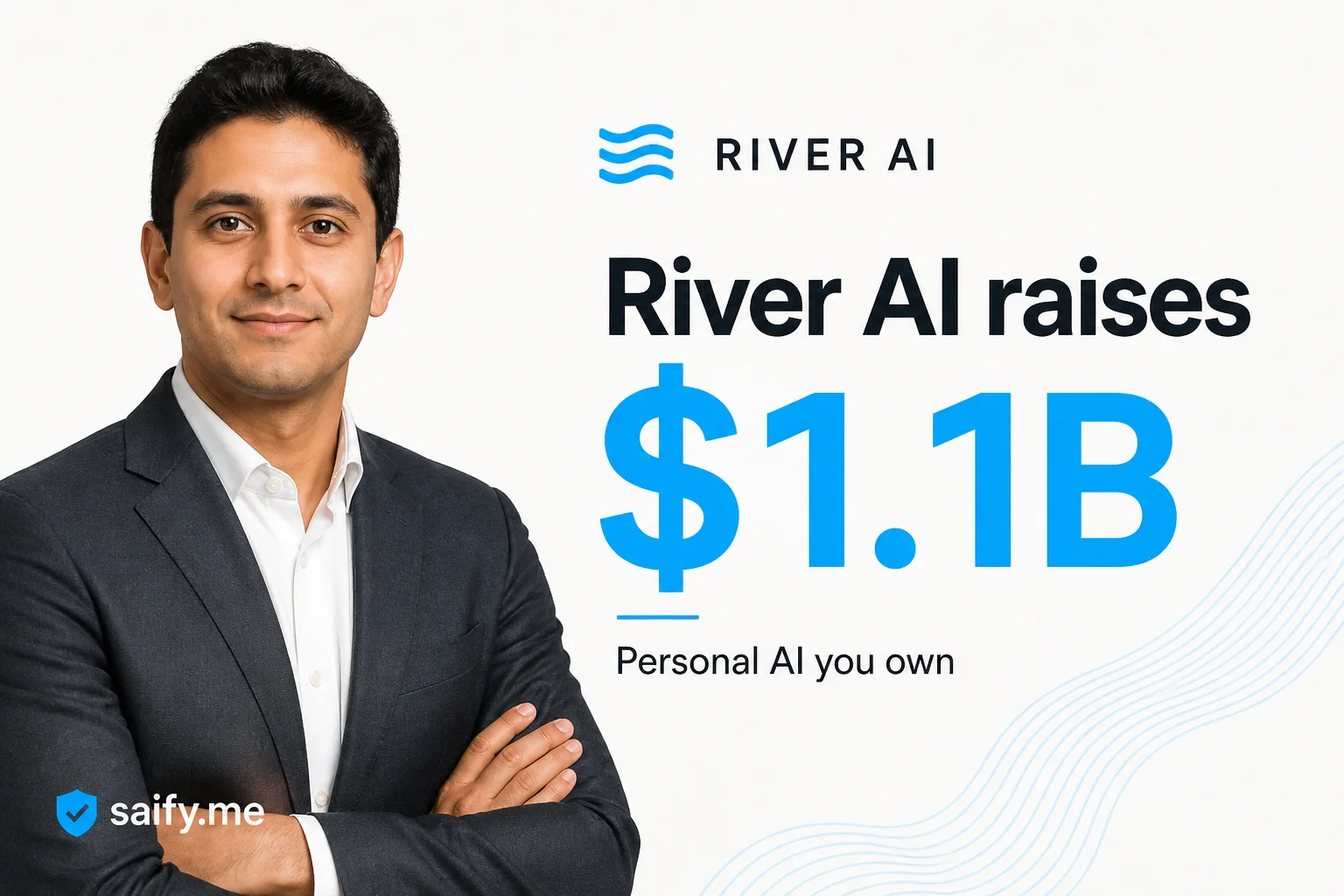
Two months old. $1.1 billion raised. A founder who helped start xAI, worked at OpenAI, Tesla, and Google DeepMind.
River AI is either the clearest expression of the "own your model" backlash, or another eye-popping bet on a company with more vision than shipped product. Probably both.
Igor Babuschkin left xAI in 2025 and came back with a thesis that sounds obvious until you try to implement it: AI should work for the person using it, not the lab that trained it. River's first product is an API. The ambition is hardware plus software that keeps personal intelligence on your side of the table.
What River ships today
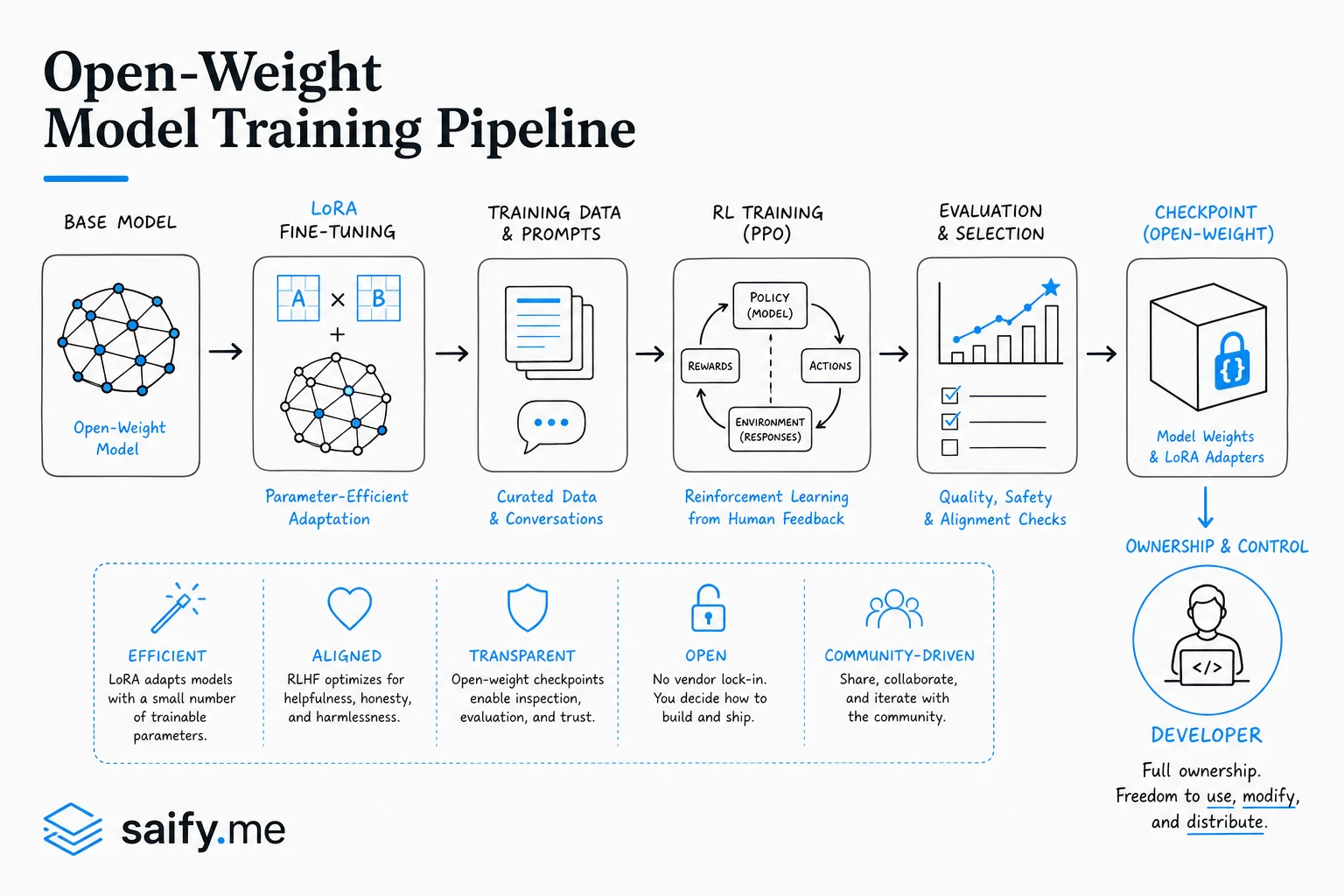
The River API is live now. One Python client for train, sample, and serve on open models from 35B to 1T parameters.
| Feature | Detail |
|---|---|
| LoRA fine-tuning | State-of-the-art adaptation on frontier open weights |
| Reinforcement learning | Custom reward functions turn open models into reliable agents |
| Token-metered billing | Pay per million tokens, not raw GPU hours |
| Checkpoint ownership | Weights are yours to keep, iterate, and deploy |
| Model menu | Qwen, Kimi, GLM, DeepSeek, Nemotron, and more on the pricing page |
River's own line is sharp: "Prompting steers a model you don't own and can't improve. River lets you train open models into ones that are truly yours."
That is the right wedge for developers tired of prompt libraries that reset every time the base model updates.
Why the timing lands
River's launch arrives when three industry pressures are loud:
- Access friction. Export controls and model bans put "which frontier model can I use?" back on the board.
- Transparency backlash. Forced watermarks and provenance labels make closed outputs feel rented, not owned. I covered the Claude marking rollout in Anthropic's invisible text watermark.
- Local and personal agents. OpenClaw, Hermes, and desktop agent UIs proved people want assistants that feel like theirs.
Babuschkin told the New York Times the goal is a highly customizable assistant that follows you across devices while running on private hardware. TechCrunch noted River wants to rebuild the stack end to end: training, models, product layer, and new hardware.
That is a decade-long roadmap wearing a two-month-old company badge. The $1.1B is a bet on pedigree and velocity, not ARR.
Funding and backers
| Round | Amount | Lead investors |
|---|---|---|
| Series Seed + Series A | $1.1B combined | General Catalyst, AMP PBC |
| Strategic | NVIDIA, AMD Ventures | Chip-side alignment for training and inference |
| Other | Y Combinator, Temasek | Standard early-stage syndicate |
SiliconANGLE reported River claims enterprises can complete complex RL runs in about 20 minutes without a dedicated infrastructure team. I have not verified that on a client workload yet. Treat it as a marketing benchmark until you run your own reward function.
How I would evaluate River on a real project
Before routing production traffic, I would test four things:
- Reward design quality. RL is only as good as your reward signal. Bad rewards bake in bad habits fast.
- Checkpoint portability. Can you export and serve on your own vLLM or NIM stack without lock-in?
- Cost at your context length. River lists separate rates for 32k vs 262k contexts. Long-agent sessions add up.
- Data residency story. Cloud API today, personal hardware tomorrow. Know where weights and training data live now.
For agent-heavy clients, River competes with specialized training APIs like Tinker and in-house LoRA pipelines. River's pitch is broader: RL plus LoRA plus serve in one metered endpoint, with a founder who has shipped at frontier scale.
The personal AI thesis in plain language
Most labs align one model to billions of users. River wants the opposite: align AI directly to each person or organization.
That sounds romantic until you remember personalization without governance is just overfitting to one user's bad habits. The product layer River promises next (continual learning for agents) is where this gets hard or gets valuable.
If you are a developer, start with the API and a narrow task: support tone, tool-calling reliability, or domain vocabulary. If you are an operator, wait for case studies beyond launch blog posts.
What I am watching next
- Hardware announcements that justify the "stack rebuilt end to end" story
- Public benchmarks on RL agent reliability vs prompt-only baselines
- Whether River's open-model menu stays current as Qwen, Kimi, and Nemotron ship weekly
- How River positions against neocloud fine-tuning from GPU hosts riding the same "own your weights" wave
River is not shipping a ChatGPT competitor tomorrow. It is shipping ownership infrastructure for teams that already decided closed APIs are the wrong long-term bet.
If you want help choosing between prompt routing, LoRA, and RL for a production agent, book a free discovery call.