
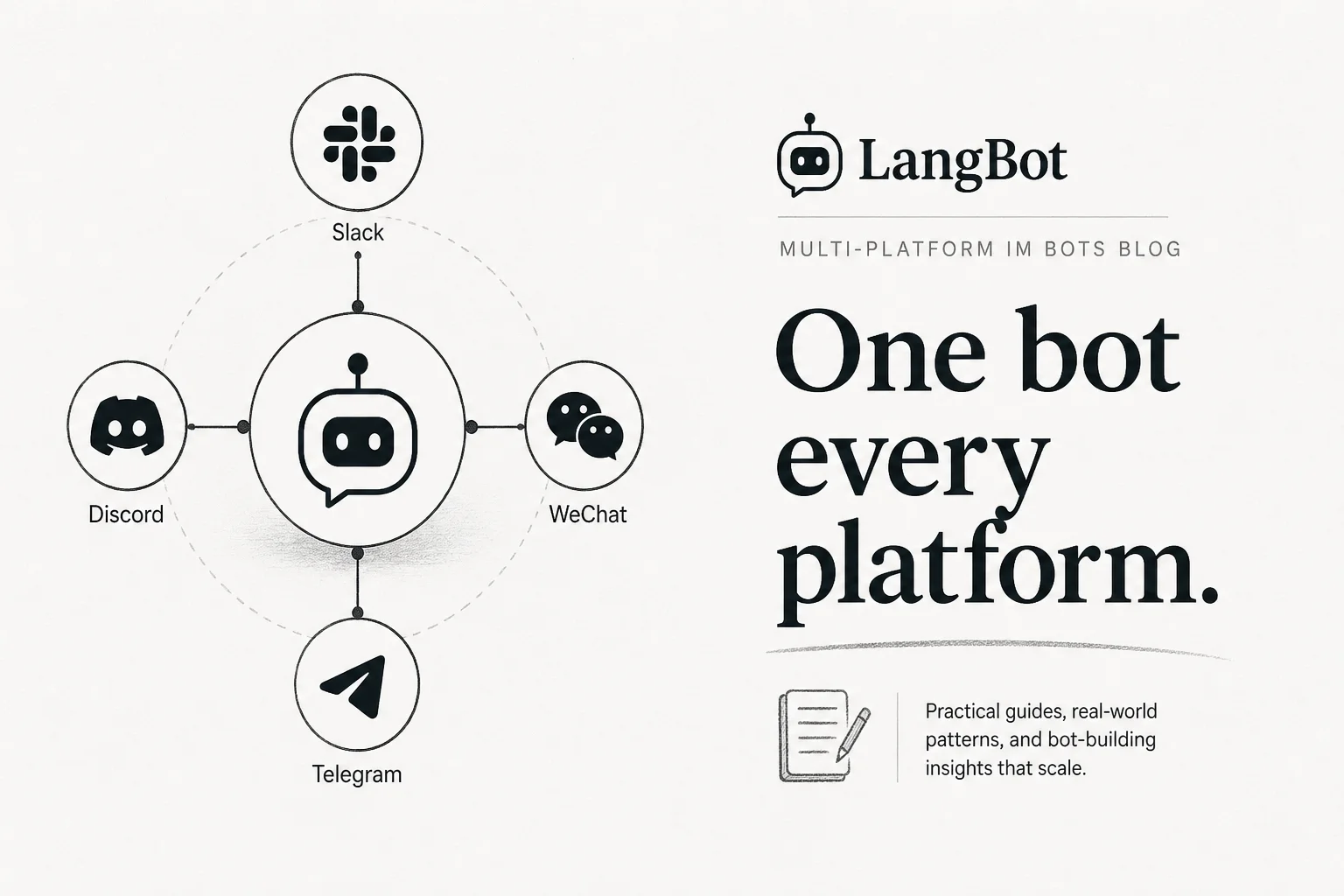
Every client conversation about AI assistants eventually hits the same wall: "Great, but our team lives in WeChat / Slack / DingTalk, not your web app."
LangBot is an open-source answer to that problem. It is a production-grade instant messaging bot platform that connects LLMs and agent workflows to Discord, Slack, Telegram, WeChat, WeCom, QQ, Lark, DingTalk, KOOK, LINE, Matrix, and more from one codebase. The GitHub repo has crossed 17K stars.
What LangBot actually does
LangBot is middleware between your AI stack and chat platforms. You configure models (OpenAI, Claude, DeepSeek, Gemini, Qwen, Ollama), agent builders (Dify, Coze, n8n, FastGPT), and knowledge bases through a web management panel. LangBot handles the IM protocol layer, access control, and message routing.
LangBot on GitHubKey capabilities:
| Capability | Detail |
|---|---|
| Universal IM support | One bot config, many platforms |
| Agent orchestration | Native Agent, RAG, MCP, Skills, code sandbox |
| Workflow integration | Plug Dify / n8n / Coze pipelines into chat |
| Plugin SDK | Process-isolated Python extensions |
| Deployment | Docker, Kubernetes, or LangBot Cloud managed hosting |
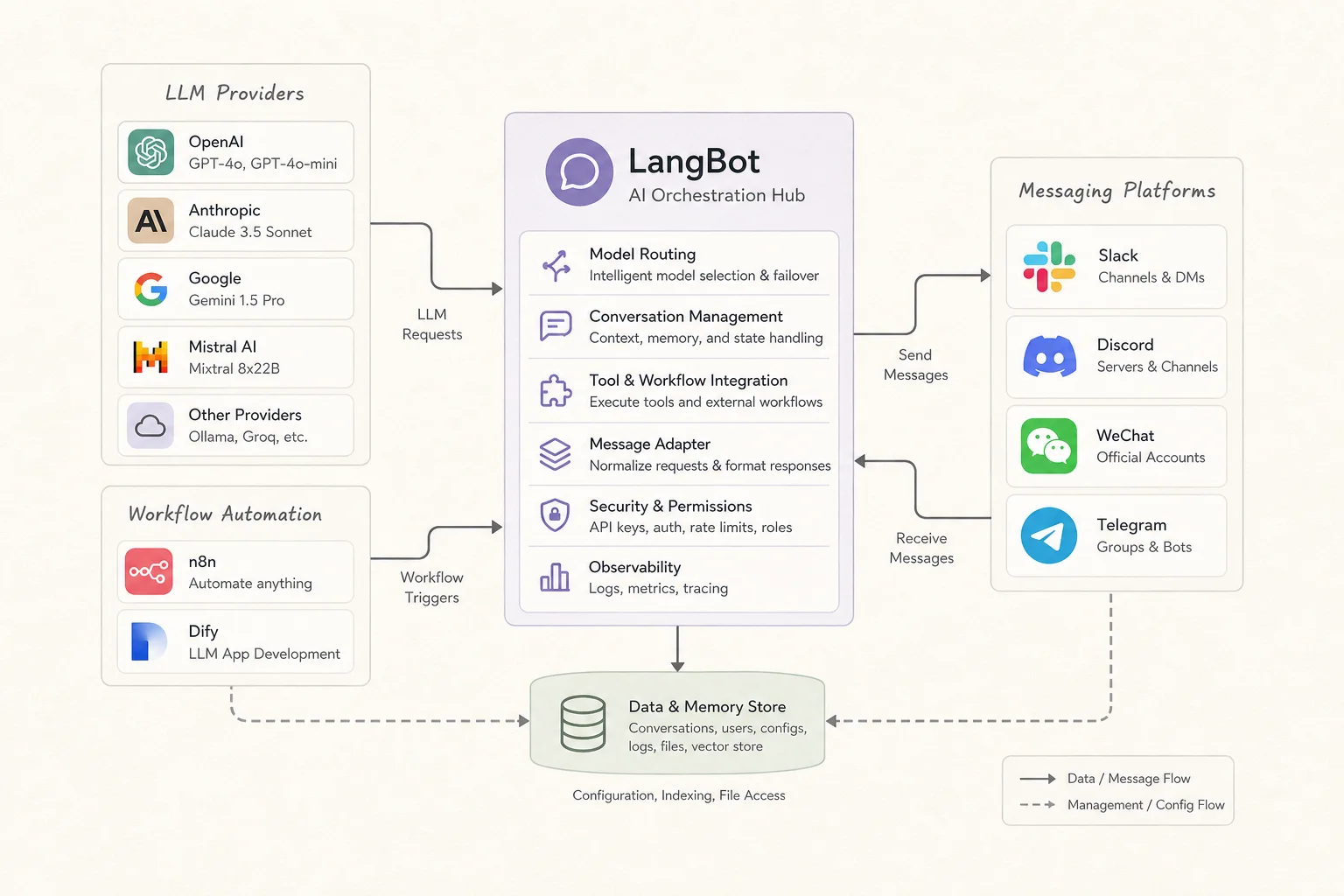
Supported platforms at a glance
| Platform | Status |
|---|---|
| Discord | Official |
| Slack | Official |
| Telegram | Official |
| WeChat / WeCom | Personal and enterprise |
| Personal and official API | |
| Lark / DingTalk | Official |
| KOOK / LINE | Official |
| Matrix | Bridges to Signal, WhatsApp, iMessage, and more |
That list matters for teams operating across regions. A US startup might need Slack and Discord. A China-facing business needs WeChat and DingTalk. LangBot tries to cover both without maintaining separate bot codebases.
Use cases that map to real ops work
Customer support bots. Deploy a RAG-backed agent to Slack or WeCom that answers from your knowledge base. LangBot handles session management and platform-specific message formatting.
Internal workflow triggers. Connect an n8n or Dify workflow to DingTalk so employees can kick off approvals, data lookups, or ticket creation from chat.
Community moderation. Run AI-powered Q&A and content filtering in Discord, Telegram, or QQ groups with plugin-extensible behavior.
Multi-platform presence. One bot definition, many channels. Central dashboard for config, observability, and access control.
LangBot platform homepage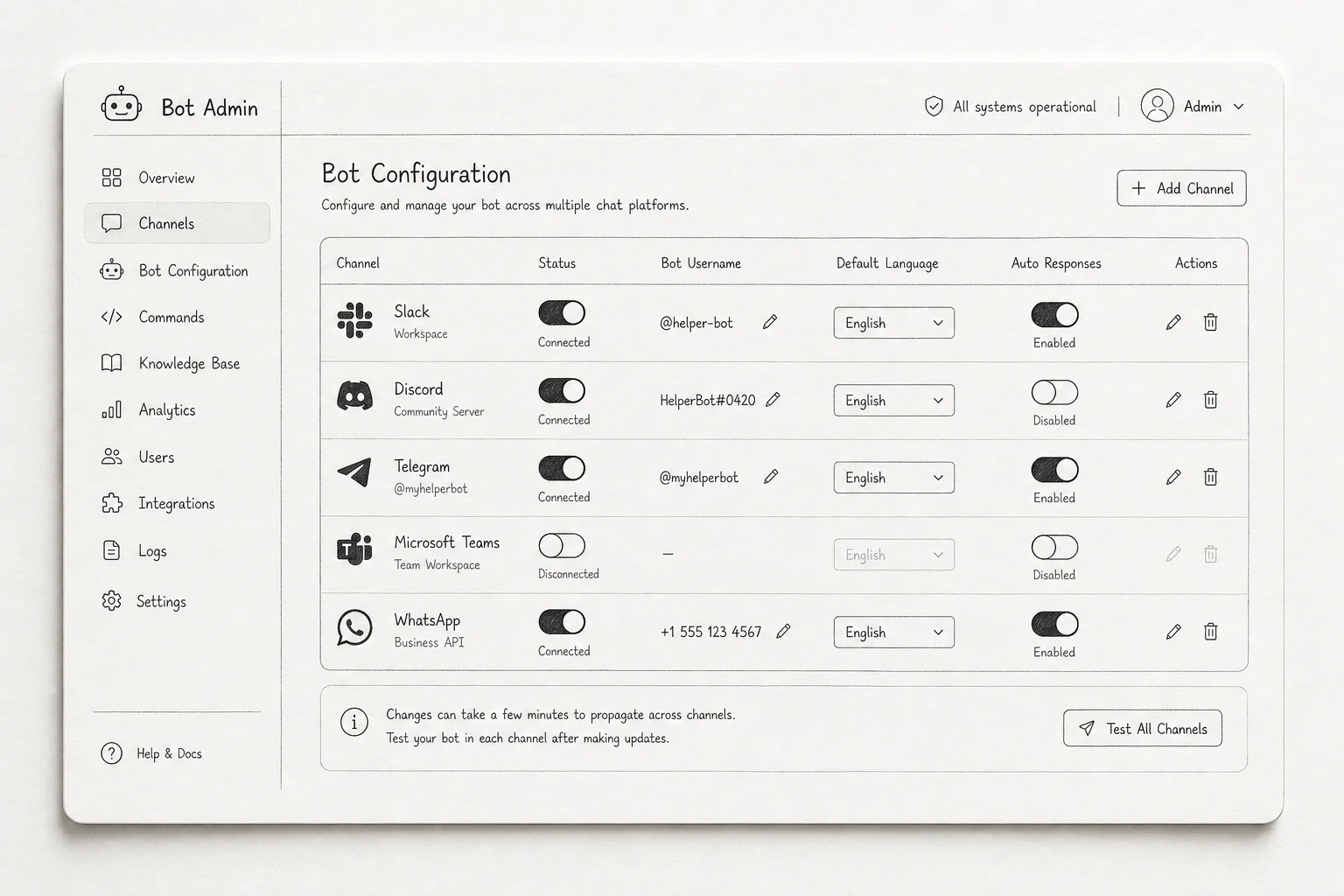
How I would evaluate it for a client project
LangBot is not a replacement for building a custom voice or web agent from scratch. It is the right tool when your users already live in IM platforms and you need production-grade routing, not a weekend webhook script.
Questions I would ask before adopting:
- Does your target platform have first-class support, or are you relying on a Matrix bridge?
- Do you need deep CRM integration, or is RAG over docs enough for v1?
- Self-hosted Docker vs LangBot Cloud: what does your compliance team require?
The 17K star count suggests real adoption, but stars are not SLA. Run a pilot on one channel before rolling out to every platform your sales team uses.
If you are wiring AI into Slack, WhatsApp, or enterprise chat and want help picking between LangBot, custom MCP servers, and no-code builders, book a free discovery call.