
Google announced Gemini 3.5 Live Translate on June 9, 2026. It is an audio-to-audio model that translates spoken language in near real time across more than 70 languages, without the awkward turn-taking older systems needed.
If you build voice agents, multilingual support lines, or field apps for global teams, this is the kind of release that reshapes your roadmap. Not because Google solved every accent edge case, but because streaming speech-to-speech just became a productized API.
How it differs from old cascade stacks
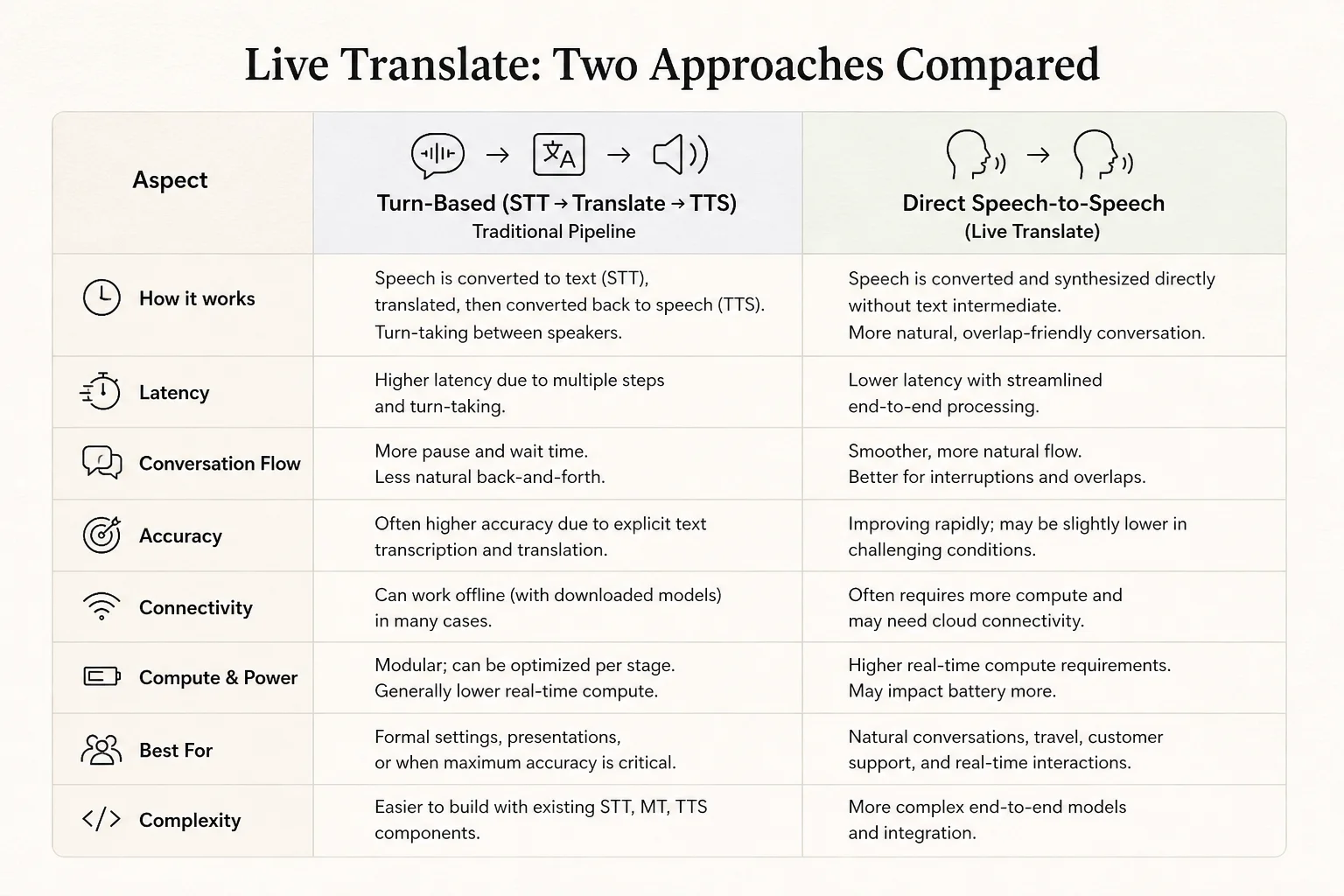
Classic live translation often looked like this:
- Speech-to-text
- Machine translation on text
- Text-to-speech with a new voice
Each hop adds latency and strips prosody. You get words right and emotion wrong.
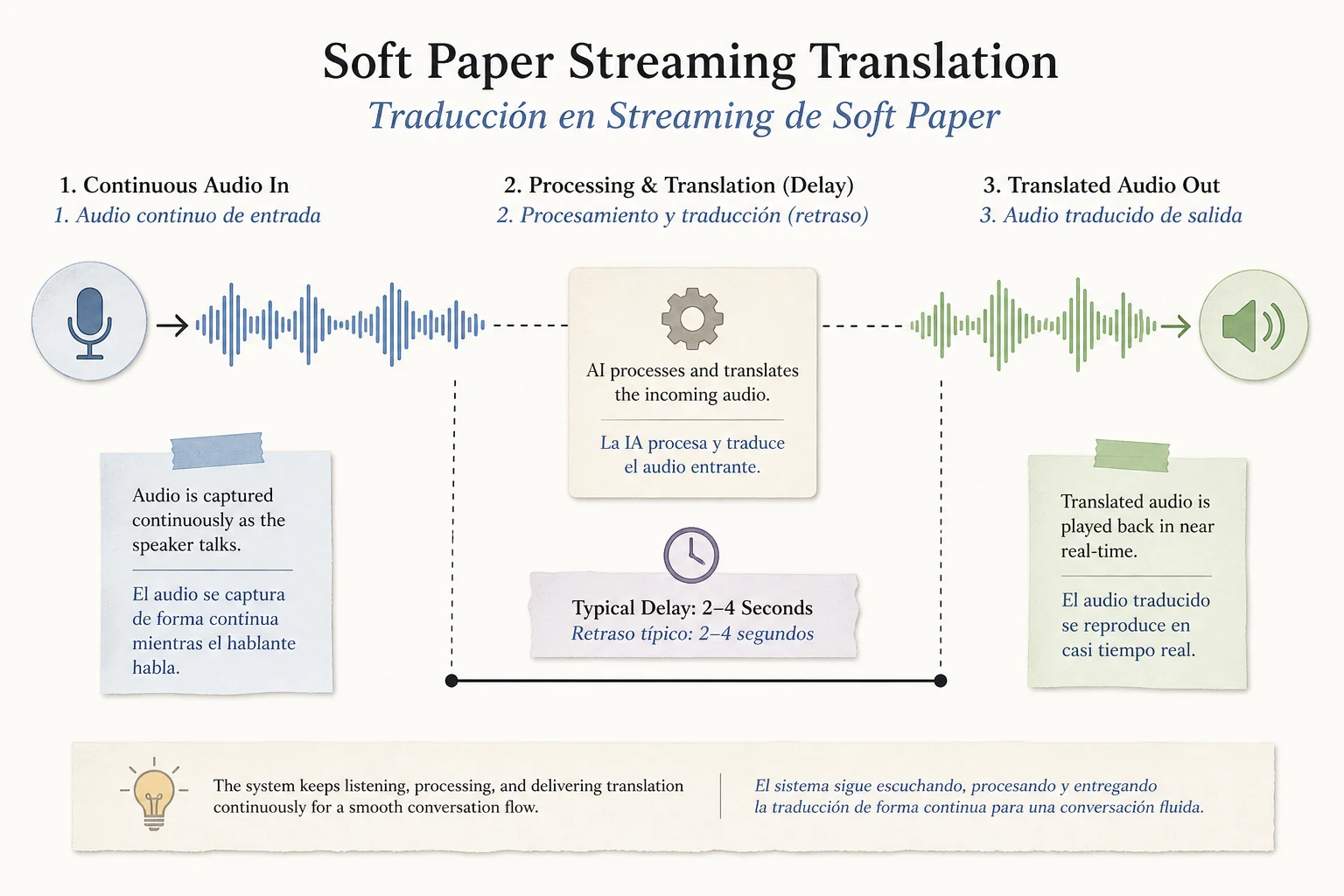
Gemini 3.5 Live Translate generates translated audio directly, staying a few seconds behind the speaker while balancing context vs speed. Google claims it preserves intonation, pacing, and pitch better than turn-by-turn systems that wait for sentence boundaries.
Where it ships first
| Surface | Status (June 2026) | Notes |
|---|---|---|
| Google Translate app | Rolling out globally | Headphones + new listening mode on Android |
| Gemini Live API | Public preview | Model ID gemini-3.5-live-translate-preview |
| Google AI Studio | Public preview | Try before you wire production |
| Google Meet | Private preview | 5 languages → 70+, 2000+ pair combos |
Meet's expansion is the enterprise headline. Previously you were mostly stuck translating to and from English in a handful of languages. The new model advertises over 2,000 language combinations in one meeting.
Developer-facing details
Google's model documentation lists:
- Input: audio (16-bit PCM, 16kHz chunks in integration guides)
- Output: translated audio (24kHz) plus text transcripts
- Context: up to 131K input tokens in the preview card
- Live API support: yes; function calling and code execution: no
You configure sessions with a translationConfig block (target language, optional echo of target language for debugging). Partners named in Google's post include Agora, LiveKit, and Pipecat-style agent frameworks.
Grab is already testing driver-rider multilingual comms. That is the use case pattern: two humans, high stakes, no shared language.
Limits worth planning for
The DeepMind model card is honest about failure modes:
- Language detection can struggle with accents, similar languages, or rapid switching
- Long sessions may drift in voice characteristics
- Background noise is partially filtered but not magic
- Echoing target language can introduce artifacts when input already matches output
For production voice products, I would still keep human escalation and text fallbacks. Streaming translation is a UX upgrade, not a compliance shield.
What this means for voice & ops automation
Most of my client work in voice AI is English-first with brittle bilingual bolt-ons. Live speech translation at API tier changes three project types:
- After-hours reception for multilingual markets. A caller may not press "2 for Spanish" if the agent can follow language automatically.
- Field service and logistics. Drivers, technicians, and dispatchers often share a workflow but not a first language.
- Internal ops bridges. HQ in one region, warehouse in another. Meetings and shift handoffs benefit before you rebuild every SOP.
You still need telephony plumbing, recording consent, and CRM logging. The model does not delete regulations.
Build vs buy framing
If you are on Google Cloud already, the Live API path is the fastest experiment budget. If you are on Twilio + custom WebRTC, factor in audio chunking, jitter buffers, and SynthID watermarking Google mentions for generated audio.
I would prototype with recorded calls before touching live customer traffic. Measure:
- Word error rate on your domain vocabulary (SKU names, street names)
- End-to-end latency perceived by humans
- Drop-off when translation confidence is low
Privacy and disclosure
Generated audio includes imperceptible SynthID watermarking per Google's announcement. Tell users translation is AI-mediated where your jurisdiction requires it. Store transcripts if you need audit trails, not just audio.
Bottom line
Gemini 3.5 Live Translate is the first Google release in a while that I would actually slot into a voice agent architecture diagram without hand-waving. Streaming speech-to-speech at 70+ languages moves multilingual from a premium add-on to a baseline expectation.
Resources:
If you want help wiring multilingual voice into CRM, booking flows, or WhatsApp handoffs, book a free discovery call. That is the messy integration layer these models do not ship with.